LabTwin's QR Code Generation
LabTwin is the world's first digital voice and AI-powered lab assistant, closing the real-time documentation gap at the bench.
My role: Assigned product manager: gathered user problems and needs, defined the MVP, validated concepts, prioritized features, limited scope, and aligned with designers and engineers on delivery

Executive summary
Oversaw the development of the QR code generation and scanning MVP to simplify documenting lab activities. Led a cross-functional team from concept to launch, resulting in 20% adoption and 5% reactivation in the first 3 months among target users.
Background and context
Scientists who conduct lab experiments must follow a guiding procedure in the form of a protocol. This ensures consistency, safety, and compliance with pharmaceutical standards, leading to reliable results and proper record-keeping of deviations and observations for later analysis.
Problem statements
- Scientists spend a significant amount of time finding the right protocol for execution.
- Scientists find it challenging to troubleshoot, calibrate instruments, and follow cleaning procedures for the first time without assistance from a more senior scientist.
- Sometimes scientists find out they are using the wrong version of a protocol and must restart their experiment, losing time and resources.
- Forgetting to print documents (protocols, safety data sheets) before entering the lab can force repeated undressing and redressing of lab coat, glasses and gloves, plus disinfecting hands. This wastes time, distracts, and often leads to lost information and human error.
- Lab managers spend additional time training new scientists on specific use cases in teams with high turnover.
Objectives and goals
Increase ROI for customers by saving scientists time in finding the right protocol, ensuring they use the most up-to-date protocol, and helping facilitate automated training programs for new scientists.
Methodology
- Engaged with the client's project team to draw company requirements and uphold industry and company standards.
- Validated user flows and prototypes with users through rapid product discovery and continuous feedback, using a user-centered design approach.
- Identified the critical path with the team by separating essential from non-essential tasks, and focused on delivering an MVP that brings value to users.
- Mapped the user's journey, wrote technical feature requirements collaboratively, broke work into user stories, and prioritized them by value and effort.
Hypothesis
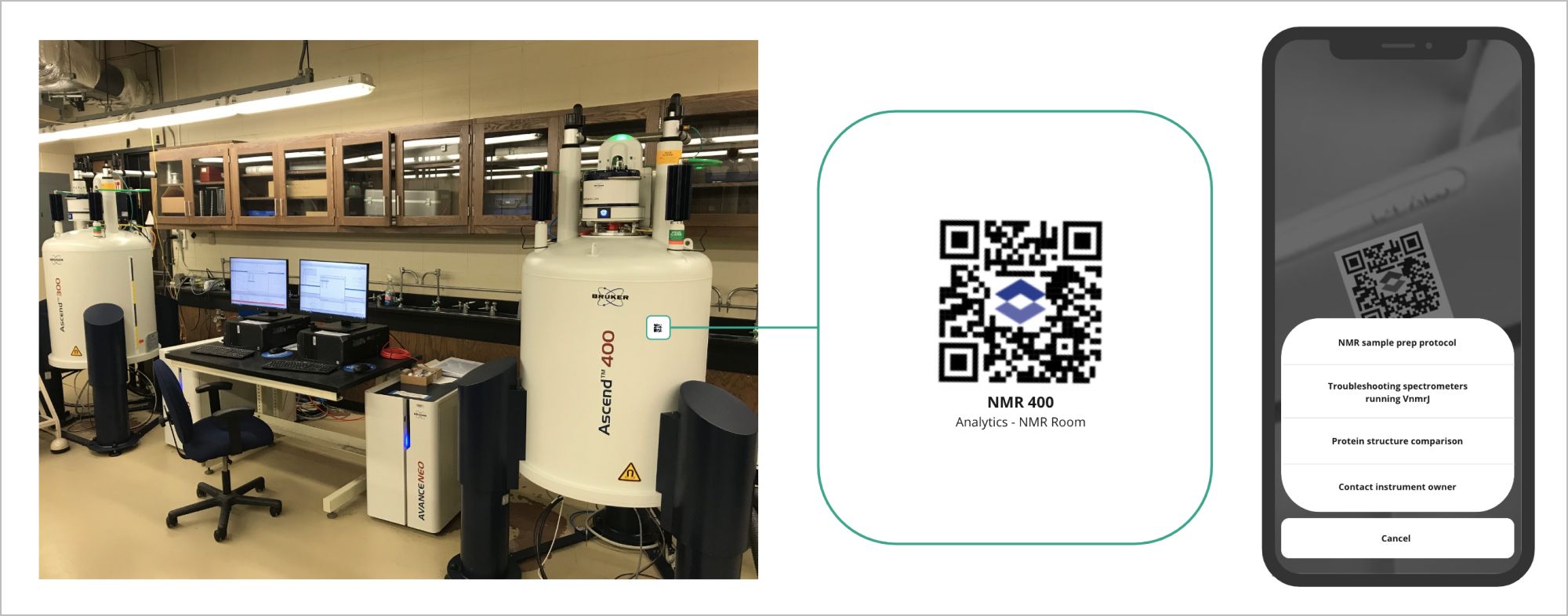
Placing QR codes with the LabTwin logo in the lab adds a physical representation for early adopters to pick up and use LabTwin. Observation of other scientists can encourage them to try LabTwin for their own use cases, leading to an increase in adoption.
Solution
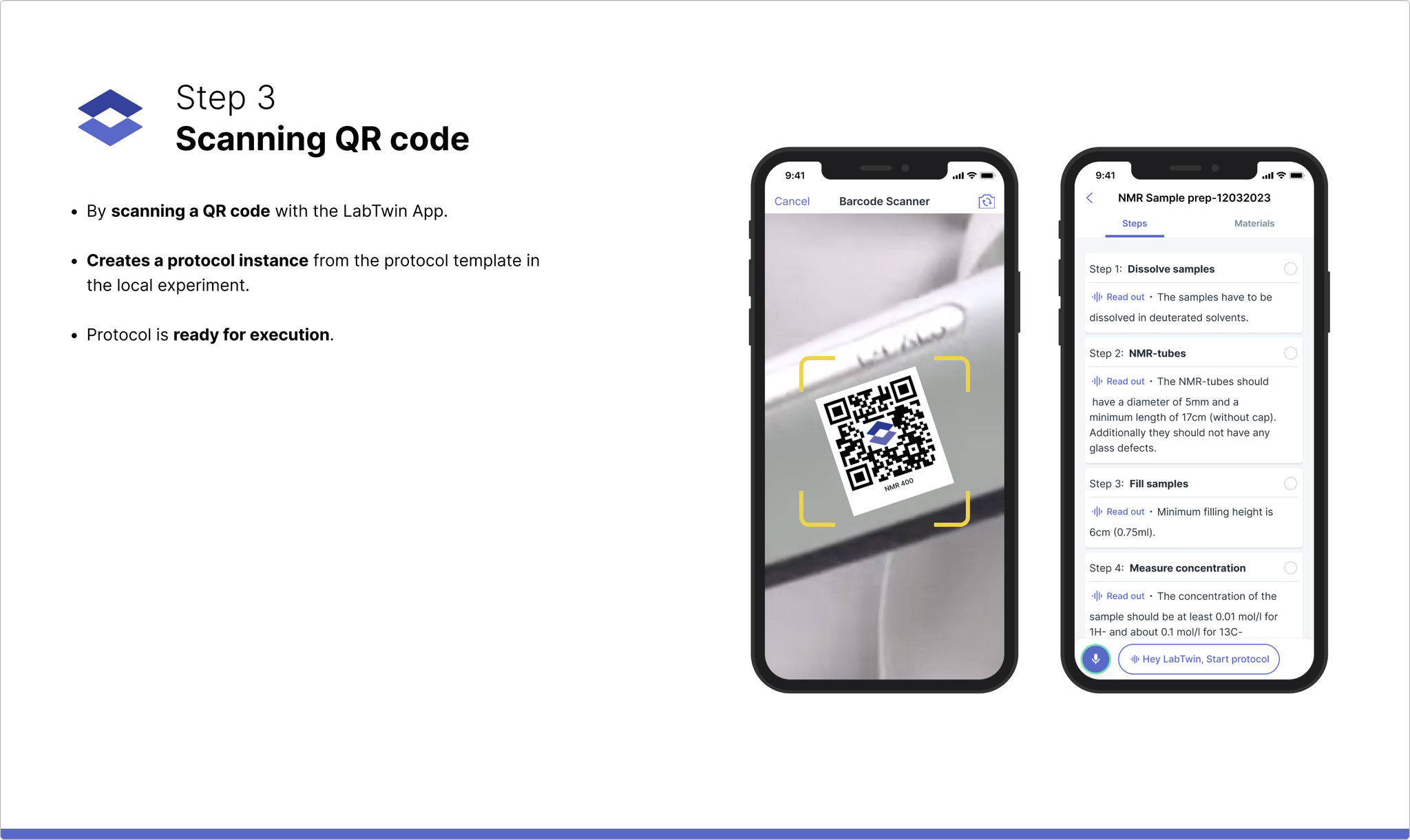
A QR code generation and scanning solution that gives immediate access to relevant, up-to-date protocol templates in the lab. Scientists use the LabTwin app to scan a code and use the protocol template to be guided and collect data in the lab, on their phone and through voice interaction.
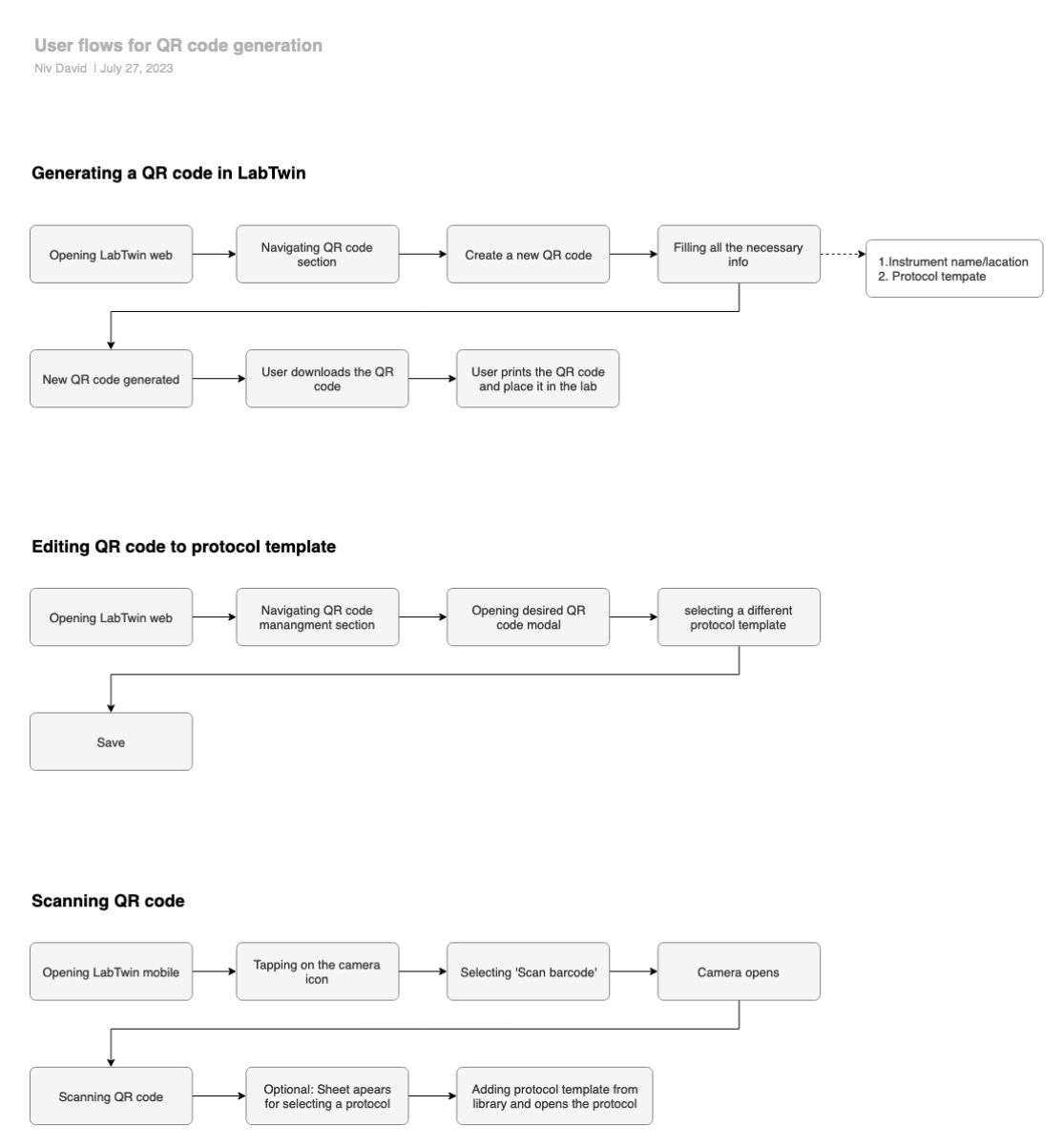
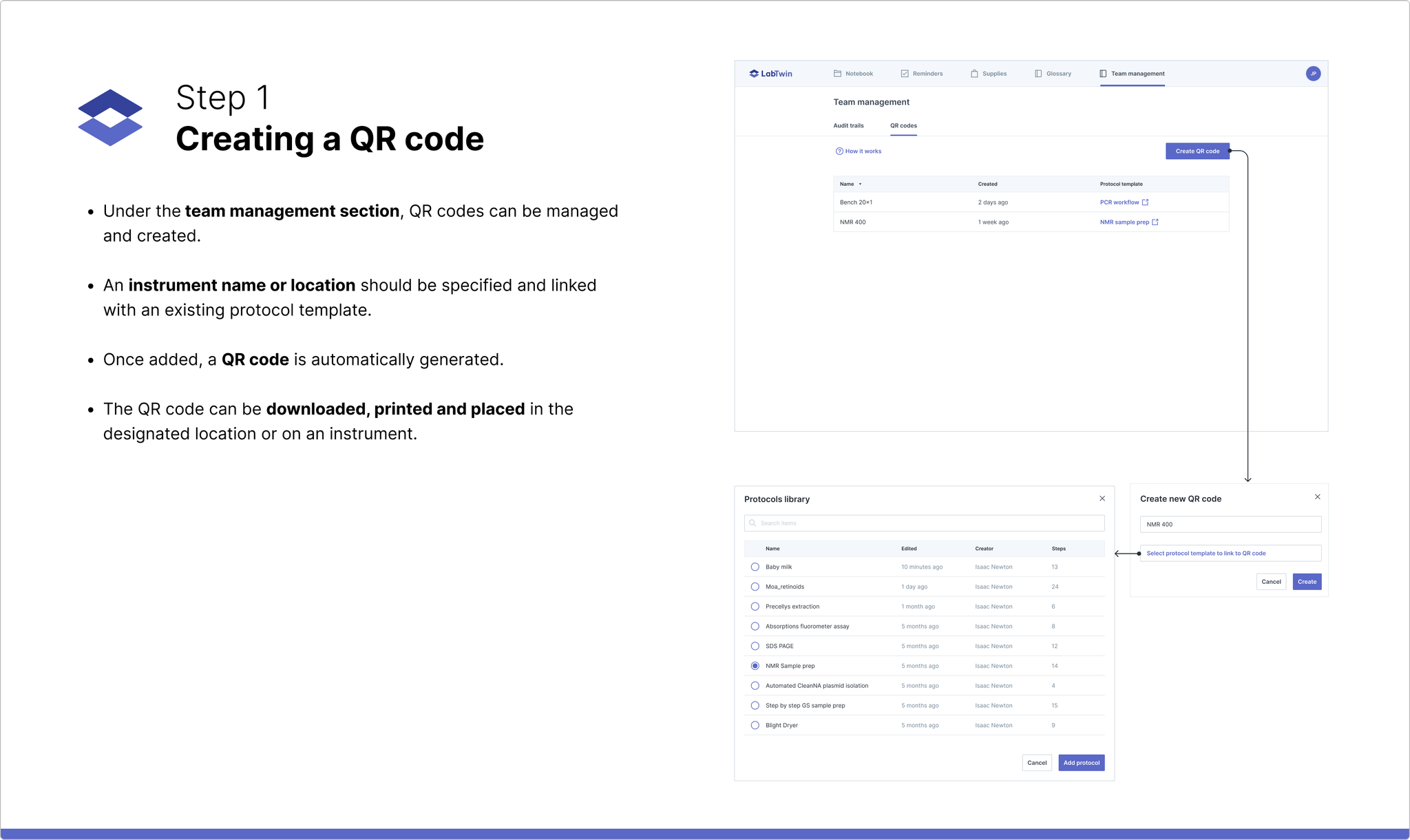
- Create, modify and delete QR codes on web.
- A dedicated space for generating QR codes, with a name for identification (location or instrument).
- Assignment of protocol templates to QR codes on web.
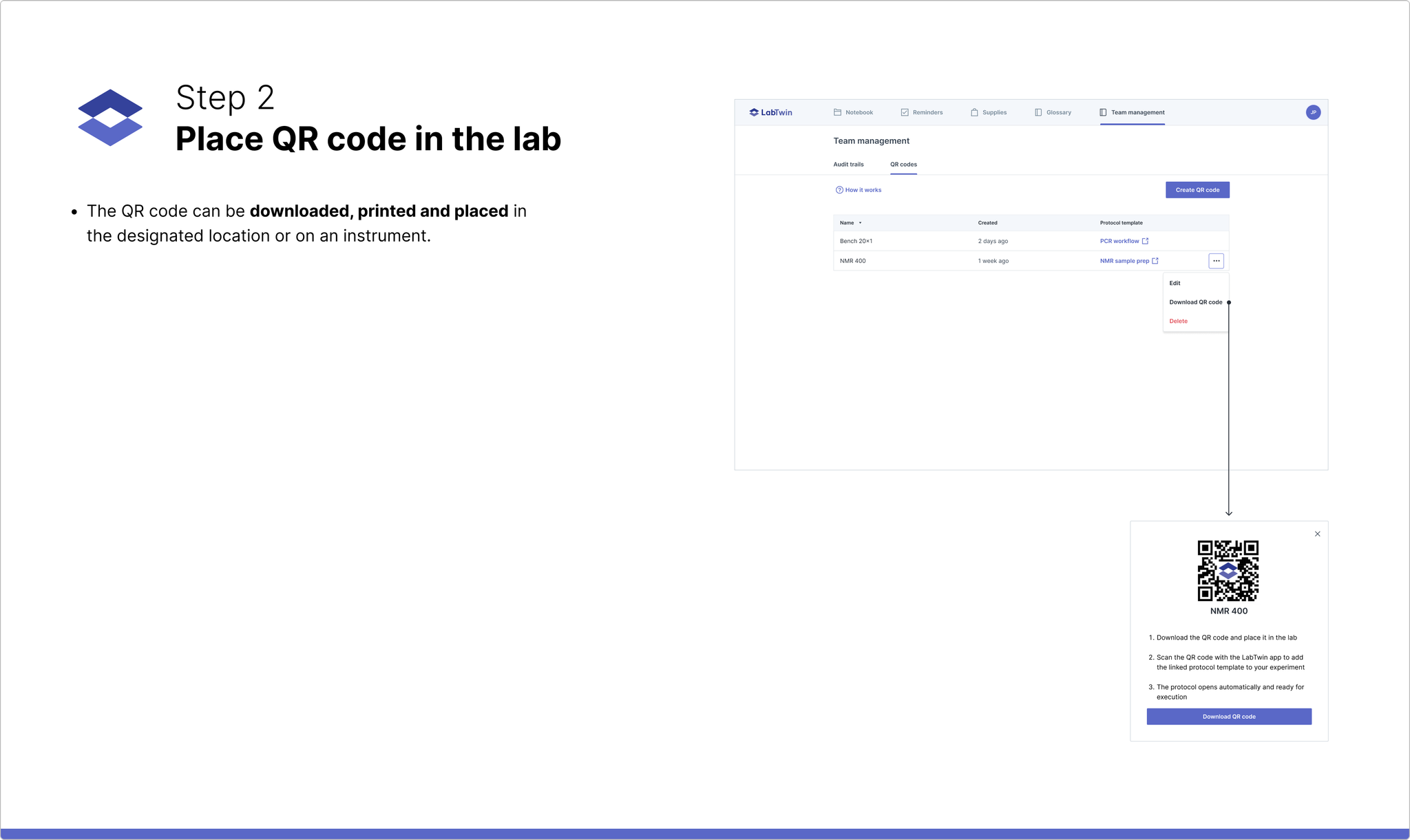
- Download of QR codes to print and place in the lab.
- Multiple templates connected to the same QR code, to support multiple use cases and scientists.
- Ability to modify the list of protocol templates associated with each QR code.
- On mobile, scanning a QR code automatically creates a protocol instance from the shared template in the scientist's own account.
Challenges and limitations
Multiple QR codes were printed and got mixed up, with no way to tell which belonged where. Resolved by adding a printed label to each QR code.
Visuals
Tracking events
- Web: user creates, edits, or deletes a QR code.
- Mobile: user scans a QR code; protocol opens after scanning.
Metrics
- Total add from library: templates added from the library per month.
- Add with QR code ratio: templates added via scan / templates added from library per month.
- Add from library ratio: templates added from library / total users per month.
- Unique add from library ratio: templates added from library / unique users per month.
Results and impact
The project resulted in a 20% increase in adoption and 5% in reactivation within the first 3 months, as colleagues observed others using LabTwin as their primary documentation tool in the lab.
"We have observed that generating QR codes has helped our scientists save time in accessing their protocols, executing them, and filling them via voice. We are planning to integrate this feature for other use cases in the lab." — Client's project responsible Project Manager
Lessons learned
- Involve customer feedback early: presenting user flows and a functional prototype mitigates the risk of building a less optimal solution.
- Scope creep pulls focus to less important features at the expense of user value. Set clear project boundaries and expectations, and work with the team to keep scope in check.
Reflection and next steps
- Let lab managers assign protocols to specific scientists for training, with notifications on completion for traceability.
- Evaluate the impact of letting users edit templates in the library, for more streamlined use of QR codes.
- Evaluate the solution and support the client's project team in applying it to other use cases such as calibration, cleaning procedures and troubleshooting, which can be recorded automatically for audit, detailed traceability and process improvement.